


Alfred LasteckBBC News in Mbeya
 BBC
BBCWarning: This article contains details that some readers may find distressing.
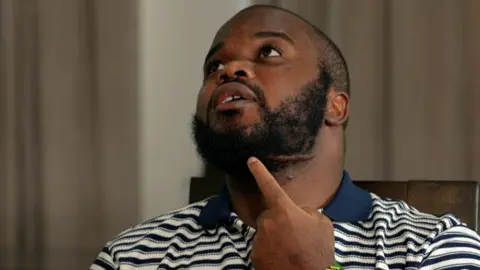
In the wake of his abduction on a highway in Tanzania’s main city Dar es Salaam, social media activist Edgar Mwakabela, better known as Sativa, says he came close to death.
He describes in an interview with the BBC how, after kidnapping him on 23 June last year, his captors interrogated him and then ferried him across the country to the remote Katavi region near the Congolese border, more than 1,000km (600 miles) away.
Sativa says he was handcuffed, blindfolded and brutally beaten, including being struck repeatedly on his head, back and legs with the flat side of a machete.
“It was extremely painful.”
He tells the BBC that those who abducted him wanted to know who was facilitating his activism, and why he was criticising the ruling Chama Cha Mapinduzi (CCM) party, in power since 1977.
Sativa believes those who held him were police officers or other operatives linked to the authorities.
However, the government denies that it targets critics of the state.
Sativa says that on the fourth day after being taken, the violence continued as his captors transported him to the Katavi National Park, full of dangerous wild animals, and dragged him towards a river.
He believes it was clear that his captors had no intention of letting him live.
Then, he says, came the chilling order shouted from a vehicle behind them: “Shoot him!”
A trigger was pulled. A bullet went through his skull. His jaw was shattered.
Sativa’s captors left – he thought he had been left for dead.
As October’s general election edges closer, abductions have become more common, mostly targeting anti-government critics and opposition voices.

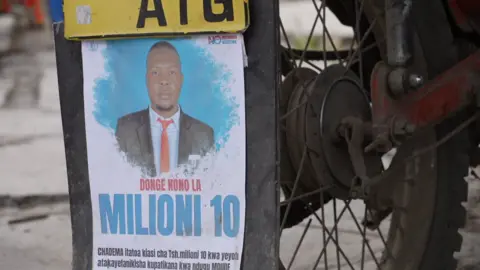
Every other week, police or social media posts announce a missing person. Some are never found and others reappear with disturbing accounts of violence or torture – and some have been found dead.
Sativa’s case offers a rare account from a survivor.
Despite suffering life-threatening injuries, he regained consciousness and crawled to a road where wildlife rangers rescued him.
He would require long and specialised treatment, and his survival has been described as “extraordinary”.
The police did not respond to BBC requests for an interview, but in a video statement released to media houses in June, their spokesperson, Deputy Commissioner David Misime, said they do act on information about those missing and conduct an investigation.
The BBC has spoken to families of people reported missing and those who have died, and they have relayed their agony over missing loved ones.
 The Citizen
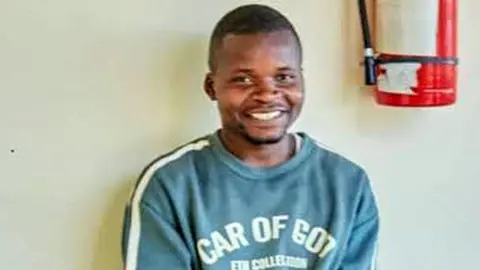
Portrait artist Shedrack Chaula, 25, is among those still missing.
He has not been seen or heard from in over a year. In June 2024 he posted a TikTok video that went viral of him burning President Samia Suluhu’s photo and insulting her.
He was arrested, convicted of cyber-harassment and released after paying a fine. A month later, he was abducted by unknown individuals.
“We don’t know when or if he will be found. When he was arrested, at least we knew where he was. Now, even the authorities say they don’t know,” his father, Yusuf Chaula tells the BBC.
He says that in August 2024, three men arrived in a car with tinted windows and seized him. They did not identify themselves or explain why or where they were taking him.
“We have made every effort. We are exhausted. We visited every detention facility. We went to prisons and police stations at different levels – local, district and regional,” he says.
The police have insisted that an investigation is in progress.
“If we knew where he is, or where he is being held, or even if we knew he had died and been buried somewhere, at least we’d have a grave to visit,” Mr Chaula says mournfully, grappling with the torment of unanswered questions and the absence of closure.
In June, UN experts reported that over 200 enforced disappearances have been recorded in the country since 2019.
They expressed alarm over the “torture to silence opposition and critics” ahead of the elections, and called on the government to “immediately” stop it.
Rights groups Amnesty International and Human Rights Watch recently accused the government of being behind arrests, abuse and forced disappearances.
The authorities have denied the allegations.
The police have identified at least a dozen abduction cases since last year some of which have since been resolved, with many going back to 2019.
On 18 June, the police announced that investigations had led to the discovery of some victims who were still alive.
They added that some cases involved self-staged abductions, while others arose from romantic relationships gone sour, superstitious beliefs and property disputes.
“The police force urges relatives, friends…
Loading PerspectiveSplit analysis...


